Showing posts with label learning tools. Show all posts

Sunday, March 13, 2011

Arithmetic versus Mathematics

Math is commonly taught sequentially, which seems logical for such a logic-based subject.
Students begin with numbers, move to addition, subtraction, multiplication, division, and so on, with much repetition in order to drum in the facts.
At the end of all the years of worksheets, quizzes, tests, and regurgitation, what remains? Too many children turned off of one of the most important aspects of our lives: math.
How many future astronomers, doctors, physicists, mathematicians, engineers, and architects have we lost because math basics were turned into one of the most boring, humdrum, tedious subjects?
Many children cannot learn math in the traditional way. They balk at learning the multiplication tables, yet can clearly and excitedly explain factorials and irrational numbers. What do we do with these children? Kill their love of numbers through endless drills, or let their numerical minds soar, knowing that the basics will come as needed?

A terrific blog post by Mark C. Chu-Carroll, "What is math?: Good math, bad math," addresses this question. He discusses the beauty of math, the pervasiveness of mathematical structure, and the necessity of understanding math.

As homeschoolers, we can break the cycle of "drill-and-kill." We can adapt our math lessons to fit the student. Worksheets may work for some concepts, hands-on activities for others. Showing real-life applications will make the math concepts more accessible. Math story books, such as The Number Devil: A Mathematical Adventure, the Math Adventure Series, math poetry books, et cetera) introduce math concepts in an engaging, non-threatening format. Math games (Equate: The Equation Thinking Game, Pizza Fraction Fun Game, and many more) make learning math an interactive experience, instead of a solo endeavor. Computer games (Zoombinis, Reader Rabbit, and more) teaching math concepts in a progressive and entertaining fashion.

Take a moment to read Mark Chu-Carroll's post, and then take a look at how you are approaching math with your children. Remember, the first rule of teaching must be "Do no harm."


Article by Sarah J. Wilson

Sunday, March 6, 2011

Learning Fact Families

One of the great ways to learn addition and subtraction facts or multiplication and division facts is to memorize not the facts but the "fact families." For example, in addition/subtraction the numbers 3, 5, and 8 form a fact family with the following facts: 3+5=8, 5+3=8, 8-3=5, and 8-5=3. In multiplication/division an example family for the numbers 4, 5, and 20 would be: 4x5=20, 5x4=20, 20/5=4, 20/4=5. Fact families are great because by memorizing that three numbers have a relationship to each other, you actually memorize four facts. Many of us have done this informally and will almost expect to see the third number of a fact family when faced with the other two numbers.

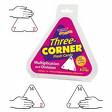
There are commercial three sided flash cards available from Trend. But for a lower cost alternative, here is a great page from Math Cats with fact family cards you can print yourself, a nifty holder for them which covers up part of the card, and many games for both addition/subtraction and multiplication/division.

Try fact families especially with kids who are good at seeing relationships between information and for those who haven't been successful with regular flash cards. 


Article by Heddi Craft

Thursday, March 3, 2011

Bringing Music to Life

For your convenience, I've placed links to some of the products listed in my Amazon store. You may also use this link to go directly to Amazon. As an affiliate, I receive a small commission on items sold through my store or my affiliate link.


In my Catholic high school, we took one semester of Music and Art in the Western World, more commonly known as MAWW. Naturally, because it was a Catholic school and the Catholic Church initially paid for much of the western world’s art and music, most of what we studied was religious in nature.

Now, while I did not have any issues with the pieces covered, I knew I had missed a huge chunk of western music.

So, when we decided to incorporate music into our homeschooling, I felt at a loss. What did I really remember after all these years? How could I make it interesting, not killing all enthusiasm for the subject?

First, I decided that I was not going to make music a “subject.” I was going to find a way to make it part of our lives.

We had always had CDs in the player, and neighbors on their daily strolls would see us dancing around like fools. Still, I wanted to expose my family to more classical pieces than Tom Jones (O.K., he is a classic) and Madness. I purchased Best Classics 100 Volume 1 and 100 Best Baroque CD sets. We played the CDs at home and in the car, discussing which pieces were our favorites and which we wished we could skip. Naturally, we did not always agree on the pieces, so we would have to sit through something someone else loved, waiting for our favorite. This provided the opportunity to share what we liked about our favorites, which occasionally gave the others an appreciation for the piece.

Next, came across a treasure-trove of vinyl albums on our local FreeCycle list. I think we ended up with 30+ recordings, including classical, jazz, ballet, holiday, and more. We listened to the same piece led by different conductors and discussed the differences. We heard music we had never experienced and some we recognized from favorite films or even commercials.

Then I learned about Beethoven's Wig, sing-along versions of the classics. Some were so hilarious, they had us in tears! What I found fascinating was that my boys would only actively listen to the sing-along versions for months, while passively listening to the original versions simply because we left the CD playing, until they suddenly only wanted to listen to the original versions. In fact, my eldest is now learning some of the pieces with his piano instructor. (We gave our piano instructor the first Beethoven’s Wig CD, so he could discover the appeal for himself.)

For more resource ideas,
check out GHF’s Resource Review page.
For Christmas, we received Can You Hear It?, by William Lach, a Senior Editor at The Metropolitan Museum of Art. The book and CD set includes 13 tracks matched with 13 works of art. For example, Antonio Vivaldi’s Four Seasons - Winter I Allegro Non Molto is paired with Pieter Brueghel the Younger’s A Winter Landscape with Skaters and a Bird Trap. Questions include “Can you hear the first skater out on the ice, showing off in big loops and figure eights?” The explanation follows, “The solo violin plays the skater, using quick notes to show the gliding motion.” Wonderful! We sit together with the book in our laps, as we listen to the CD.

We also discovered Leonard Bernstein - Young People's Concerts / New York Philharmonic
on DVD. Leonard Bernstein was a modern composer (West Side Story), conductor, and general lover of music. Despite the early shows being in black and white (usually a death knell with modern children), we sit glued to the television when watching the concerts. Bernstein discusses all aspects of music: what does music mean, humor in music, folk songs, what is American music, sonata form, and so much more. Every point is enhanced with music. The audience participates. And Bernstein’s passion for music flows through each episode.

Music permeates our lives. We listen to it, discuss it, and see it in the world around us. We readily share our opinions (no shortage of opinions in our household), find a variety of music “dance-worthy,” and now have lives filled with music.

Article by Sarah J. Wilson