It may be the middle of summer, but many homeschoolers are beginning to plan their curricula for the upcoming school year.
Seemingly endless choices parade before their eyes, as catalogs arrive in mailboxes, companies exhibit at conferences, and other homeschoolers post rave reviews of products they've used. Once a parent sorts through all this and decides what to use, sticker-shock hits. Who knew homeschooling could be so expensive?
In comes the Homeschool Buyers Co-op to the rescue! Using the purchasing power of over 67,000 homeschooling families, the Homeschool Buyers Co-op offers steeply discounted materials and courses.
Joining the Co-op is free and easy. Just register on their site. You can then peruse the many categories and products they currently have on offer. You will also start receiving a periodic e-newsletter announcing current and upcoming deals, as well as free curriculum discoveries by Diane Flynn Keith.
Once you find a product you want to purchase, you'll notice that it has price points, depending on how many people order. The more people who order, the greater the discount: sometimes up to 90 percent! You decide which price you're willing to pay. Once the number of buyers reaches that level, that price goes into effect. If more buyers step up, pushing the price even lower, you get the lower price.
The Homeschooler Buyers Co-op charges a small processing fee on each order (a few dollars), which does not reduce the value of the service in any way.
In addition to pooling together the buying power of homeschoolers, the Homeschool Buyers Co-op offers free homeschool ID cards, SmartPoints for purchases made, free curricula, and other money-saving ideas.
You can learn more about the Homeschool Buyers Co-op at http://www.homeschoolbuyersco-op.org/homeschool-curriculum/, on Facebook, and on YouTube.
Article by Sarah J. Wilson
Showing posts with label curriculum. Show all posts
Showing posts with label curriculum. Show all posts
Thursday, July 21, 2011


Monday, July 4, 2011
Song School Latin

Song School Latin approaches Latin in the way of many other children's language curriculums, by starting with simple words and phrases to talk about ourselves, name items in our world, and say various polite phrases. Although Latin isn't used as a spoken language today, this method means we have lots of words to practice in our daily lives.
Each lesson of words is introduced by a song that mixes the Latin and English words so that the meaning of the former can be implied by the latter. The songs are memorable and have especially helped my musical daughter in remembering the vocabulary. A "Chapter Lesson" gives a short bit of information on Latin grammar or points out a Latin phrase still used today. "Grow Your English" points out English words that have Latin derivatives. "Practice Your Latin" is a collection of activities where you write, circle, draw, or match Latin and/or English words. Every fourth chapter is a review.
Online you will find additional audio files, coloring pages, and a flashcard game for each chapter's vocabulary. The Teacher's Edition contains the answers (not needed as the exercises are simple) and an additional practice page for each chapter.
The book is recommended for grades K-3. I am using the program with my 8 and 10 year old so we are taking it four chapters at a time, which gives us about 16 new vocabulary words or phrases a week. Don't expect to learn much grammar from this curriculum, it introduces very little that can be applied outside of the given words. The connections to English words and phrases are great, though, if you want to study Latin as a way of learning English vocabulary. I recommend Song School Latin for young children or if you want a fun introduction to Latin before using a more complex curriculum.
Thursday, April 28, 2011
Word Ladders
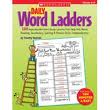
The Daily Word Ladders books by Scholastic are a great resource for building vocabulary and spelling skills.
Available for grades 1-2, 2-3, and 4-6, each book uses the same concept at increasingly difficult levels. Each page shows a ladder of 5 to 10 rungs. The first rung has a word. The second rung gives a clue for the word that belongs on the next rung and lines for each letter of that word. For instance, on one ladder the first word is "coat" and the clue for the next rung is "A black rock that produces heat. Change one letter." The activity continues in this manner, with clues to add, subtract, rearrange, or change letters to create a word with a particular meaning until you reach the top rung. Each page has a theme to which the top and bottom word belong-- so "hot" may be turned in to "cold" or "coat" turned into "glove".
The wonderful thing about word ladders is they combine the elements of a game with some great brain exercises. It's fun to discover that changing a single letter changes the sounds of almost all the letters around it. These books are a great addition to vocabulary and spelling curriculums. We don't use them daily in our family, but they are a fun alternative to our regular curriculum.
Available for grades 1-2, 2-3, and 4-6, each book uses the same concept at increasingly difficult levels. Each page shows a ladder of 5 to 10 rungs. The first rung has a word. The second rung gives a clue for the word that belongs on the next rung and lines for each letter of that word. For instance, on one ladder the first word is "coat" and the clue for the next rung is "A black rock that produces heat. Change one letter." The activity continues in this manner, with clues to add, subtract, rearrange, or change letters to create a word with a particular meaning until you reach the top rung. Each page has a theme to which the top and bottom word belong-- so "hot" may be turned in to "cold" or "coat" turned into "glove".
The wonderful thing about word ladders is they combine the elements of a game with some great brain exercises. It's fun to discover that changing a single letter changes the sounds of almost all the letters around it. These books are a great addition to vocabulary and spelling curriculums. We don't use them daily in our family, but they are a fun alternative to our regular curriculum.
Saturday, March 19, 2011
Developing Reading Skills Through Word Building
Word building is a way to learn how letters in our language behave and have fun as well. The basic concept is simple: Take a word with five or more letters, put all the letters on separate slips of paper, and give them to a child out of order. The child's job is to rearrange the letters to find the original word, but also to find other words that can be made by using two or more of the letters.
For instance, if you start with the word "breakfast," you could find as, ask, fast, sat, bat, rat, fat, bar, far, rest, break, fake, take, safe, steak, and many others. In just this short list, the child is finding word families (groups of rhyming words), using the letter E in three different ways, and using a variety of consonant blends. This activity can be extended by the parent giving hints to find additional words, such as "Change one letter in FAKE to make a word that means protected," and you've added a layer of vocabulary building to the activity.
There are several books out there that have word building activities. Making Words and Making Big Words are both filled with words, lists of the possible words made from the original, and strips to copy and cut apart that have all the letters on them. These books also include spelling and phonics patterns to emphasize for each word. I also like the Scrambled Word Building Book Grade 1 and Grade 2 because the letters and space to write words are all nicely placed on a single page. My only complaint is that there isn't enough room to write all possible words.
For instance, if you start with the word "breakfast," you could find as, ask, fast, sat, bat, rat, fat, bar, far, rest, break, fake, take, safe, steak, and many others. In just this short list, the child is finding word families (groups of rhyming words), using the letter E in three different ways, and using a variety of consonant blends. This activity can be extended by the parent giving hints to find additional words, such as "Change one letter in FAKE to make a word that means protected," and you've added a layer of vocabulary building to the activity.
There are several books out there that have word building activities. Making Words and Making Big Words are both filled with words, lists of the possible words made from the original, and strips to copy and cut apart that have all the letters on them. These books also include spelling and phonics patterns to emphasize for each word. I also like the Scrambled Word Building Book Grade 1 and Grade 2 because the letters and space to write words are all nicely placed on a single page. My only complaint is that there isn't enough room to write all possible words.
Tuesday, March 15, 2011
The Best Sight Word Book Ever

Children learn to read in many different ways. Although some children seem to absorb reading skills the way they did speaking skills, others benefit from focused instructional activities. The Best Sight Word Book Ever is an excellent resource when the focus is on sight words. The first hundred most common words make up about 50% of all reading material and many do not follow phonics rules, so learning these words by "sight" is necessary for beginning readers.
There are a lot of sight word books out there, but this has a multi-sensory approach which emphasizes activities for visual and kinesthetic learners. Advertised for second language learners, the activities are perfect for any child learning sight words.
170 high frequency words each get a two page spread of six to eight activities. There are three panels per page, which are meant to be cut apart into strips and stapled together into a long, skinny book. Three activities are always the same: a page in which the word is "rainbow traced" with three different colors of marker or crayon (crayon works best), a page in which the letters of the word are scrambled and the child must cut them out and organize them to spell the word, and a page where the child traces and then prints the word. The next three to five activities include some combination of the following: word searches of various sorts, building a "pyramid" of the word by adding a letter each line, matching parts of the word, dot to dots of the word, sentences to finish with the word, filling in the missing letters in the word, and coloring the word as it hides among similar words.
The book is arranged alphabetically so it's easy to find words. I have used the book as prereading practice when I knew a new sight word would be in our reading text and also after reading when a specific sight word caused trouble when reading. To make the book easier to use, I took it to a copy shop and had them remove the binding and three hole punch the pages for easier copying.
There are a lot of sight word books out there, but this has a multi-sensory approach which emphasizes activities for visual and kinesthetic learners. Advertised for second language learners, the activities are perfect for any child learning sight words.
170 high frequency words each get a two page spread of six to eight activities. There are three panels per page, which are meant to be cut apart into strips and stapled together into a long, skinny book. Three activities are always the same: a page in which the word is "rainbow traced" with three different colors of marker or crayon (crayon works best), a page in which the letters of the word are scrambled and the child must cut them out and organize them to spell the word, and a page where the child traces and then prints the word. The next three to five activities include some combination of the following: word searches of various sorts, building a "pyramid" of the word by adding a letter each line, matching parts of the word, dot to dots of the word, sentences to finish with the word, filling in the missing letters in the word, and coloring the word as it hides among similar words.
The book is arranged alphabetically so it's easy to find words. I have used the book as prereading practice when I knew a new sight word would be in our reading text and also after reading when a specific sight word caused trouble when reading. To make the book easier to use, I took it to a copy shop and had them remove the binding and three hole punch the pages for easier copying.
Article by Heddi Craft
Sunday, March 6, 2011
Spelling Power
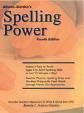
If you are a homeschooler looking for one spelling program that can last you from third grade through high school, Spelling Power may be for you. The author has created a program based on the idea that students should learn to spell the most frequently used and frequently misspelled words using a multisensory practice method.
You will need to spend an hour or two going over the instructions at the beginning of the book for using the program, but here are the basics:
A fairly simple pre-test allows you to place your child on the correct level in the eleven levels of words, no matter what the child’s age. The words are then organized within the levels by their usage of the 44 sounds used in the English language, often the vowel sounds. For instance, a group of words may all use the long E sound but the spellings will include ea, ee, y, ie, ei, ey, and eCe. (Isn’t English just grand?) As you begin each list, you discuss the “rule” for how that sound can be spelled.
Daily spelling practice in this program is 15 minutes long. For the first five minutes you give a pretest for the words on the current list your child is working on: You say the word, use it in a sentence, your child repeats the word, spells it on his/her paper, then says the word again, you spell the word correctly, and your child immediately corrects it of wrong. When you get to the end of five minutes or the end of the list, you stop testing. At this point, your child usually has 1-3 words to practice.
For the second five minutes, your child practices the words. A study sheet leads the child through a multisensory practice which includes examining the word for patterns, saying the spelling aloud, visualizing the word with eyes closed, and using large muscles to write the word on a textured surface. The child also uses the missed words in a sentence of their own creation. The next day, these missed words are the first to be tested.
The third five minutes is devoted to activities from a menu in the back of the book to reinforce spelling skills. I will admit that we to do not do this step, but we do use similar activities at other times of the week.
The program is meant to be daily, and I will also admit that we use it twice a week, which seems to work well for our family. The word lists appeal to my sense of organization and the program does seem to work better than the traditional study 20 words, test, and forget method. I appreciate it that only the incorrect words are studied and retested and that the practice process is multisensory.
To mix things up, we sometimes use the word lists in other ways as we work through them. For instance, we input them into a computer program designed to practice more traditional lists and my son does those activities instead.
I’ve found the book to be a worthwhile investment, and recommend it for families who want a short and simple spelling program. It would best suited for children who like the consistency of a repeated activity as the daily work varies very little from day to day.
Article by Heddi Craft
Article by Heddi Craft
Friday, March 4, 2011
Five Steps for New Homeschoolers
Congratulations! You’ve decided to homeschool. But now you lie awake at night and wonder, “How do I start?”
Here are my five suggestions to help you on your journey:
1) Do NOT buy anything! Not a pencil. Not a book. Not that beautifully packaged curriculum which promises to teach your child everything he will ever need to know, without any work on your part, and will even change the baby’s diaper while you sit musing on the wonder that is “homeschool.” Don’t buy a thing!
2) Join support groups. You can find online groups through Yahoo or Google. The HomeSchool Association of California (HSC) has an active list, as does the California Homeschool Network (CHN). You can ask online or your local librarian about park days in your area. Also, check online for places like theDiscovery Learning Center
3) Go to the library. Why? Because libraries have books about homeschooling! Just ask your librarian (yes, again). While you are at the library, check out loads of books for the kids. See a family filling a huge bag or crate with books? Chances are they are homeschoolers. Ask them. If anyone knows what is going on in your area, they will.
4) Watch your kids. You must start to really watch and learn how your kids work. What captures their attention? How do they digest new information? You cannot do this if you are forcing workbooks, reading, math, and other “education” down their throats. Let them be for awhile, and observe who they really are and how they learn. You may find out, as I have, that one child is an auditory learner (must repeat new information immediately, and needs to share that knowledge with others, in order to retain it), and the other is tactile/kinesthetic (learns through play, hands-on, and physical activities).
5) Go places. Even mundane errands, like dropping off the dry cleaning, can become a learning opportunity. You view it as another item on your To Do list, while your children may wonder what is dry cleaning, why do some clothes need dry cleaning, where are the owners from, what are those huge machines, how many hangars are on that rack . . . Like your To Do list, the possibilities are endless. Of course, you can take them to more traditional places, like museums and fire stations, but do not overlook the relevancy of the every-day.
Now that you have incorporated the above steps into your life, I give you permission to buy something for your homeschool. Do it slowly, and do not be afraid to throw away (or give away, or even sell) something that isn’t working. May I suggest that your first purchase be ice cream for your “class”? (How is ice cream made? Why do we eat soy ice cream? What are calories? How much did it cost? What is it like owning an ice cream shop?)
Article by Sarah J. Wilson
Here are my five suggestions to help you on your journey:
1) Do NOT buy anything! Not a pencil. Not a book. Not that beautifully packaged curriculum which promises to teach your child everything he will ever need to know, without any work on your part, and will even change the baby’s diaper while you sit musing on the wonder that is “homeschool.” Don’t buy a thing!
2) Join support groups. You can find online groups through Yahoo or Google. The HomeSchool Association of California (HSC) has an active list, as does the California Homeschool Network (CHN). You can ask online or your local librarian about park days in your area. Also, check online for places like the
3) Go to the library. Why? Because libraries have books about homeschooling! Just ask your librarian (yes, again). While you are at the library, check out loads of books for the kids. See a family filling a huge bag or crate with books? Chances are they are homeschoolers. Ask them. If anyone knows what is going on in your area, they will.
4) Watch your kids. You must start to really watch and learn how your kids work. What captures their attention? How do they digest new information? You cannot do this if you are forcing workbooks, reading, math, and other “education” down their throats. Let them be for awhile, and observe who they really are and how they learn. You may find out, as I have, that one child is an auditory learner (must repeat new information immediately, and needs to share that knowledge with others, in order to retain it), and the other is tactile/kinesthetic (learns through play, hands-on, and physical activities).
5) Go places. Even mundane errands, like dropping off the dry cleaning, can become a learning opportunity. You view it as another item on your To Do list, while your children may wonder what is dry cleaning, why do some clothes need dry cleaning, where are the owners from, what are those huge machines, how many hangars are on that rack . . . Like your To Do list, the possibilities are endless. Of course, you can take them to more traditional places, like museums and fire stations, but do not overlook the relevancy of the every-day.
Now that you have incorporated the above steps into your life, I give you permission to buy something for your homeschool. Do it slowly, and do not be afraid to throw away (or give away, or even sell) something that isn’t working. May I suggest that your first purchase be ice cream for your “class”? (How is ice cream made? Why do we eat soy ice cream? What are calories? How much did it cost? What is it like owning an ice cream shop?)
Article by Sarah J. Wilson
Wednesday, March 2, 2011
Spelling DooRiddles
For your convenience, I've placed links to some of the products listed in my Amazon store. You may also use this link to go directly to Amazon. As an affiliate, I receive a small commission on items sold through my store or my affiliate link.

My eldest son is an advanced reader; however, this has not translated into advanced spelling. I wanted to find a fun way for him to learn to spell, without endless spelling lists or constant correction from Mom. So, when I read about DooRiddles, I thought we’d give it a try.
My eldest son is an advanced reader; however, this has not translated into advanced spelling. I wanted to find a fun way for him to learn to spell, without endless spelling lists or constant correction from Mom. So, when I read about DooRiddles, I thought we’d give it a try.
As the title implies, DooRiddles contains riddles, and these riddles encourage the reader to figure out two words. For example, the riddle on the cover is:
I am a garden pest,
And haul my
house with me;
But if you
drop the N,
I push the
boat at sea.
The answers are “snail” and “sail.” By using associative reasoning, reading comprehension, and spelling skills, the reader figures out the answers.
At first, my son was hesitant to start. It was something new, and it wasn’t math, so he was unsure. Now, it sits on our coffee table and is one of the books he chooses to work on three or four times a week. In fact, he checked out the back cover and asked for more from the series. High praise, indeed!
Although he does the riddles mostly on his own, I do check them every now and then to find any repeated errors, but for the most part, it is self-correcting. If he knows how to spell one word, he can figure out the other. If he can’t figure out either, he comes to me and I give him hints.
One of the aspects I like is that the answers do not always rhyme, which I believe helps readers to works through English’s complicated spelling. For instance, the answers to one riddle are “even” and “seven.” They certainly do not rhyme, but they are visually the same. (Actually, it is a good starting point for discussing visual rhyming in poetry, if one is so inclined--but that’s just the English major in me.)
And just in case, the answers are included. But unlike most book, they are in the front, which I find leads to less peeking. Go figure!
Here’s a riddle for you (with apologies):
My authors’ names
May remind you of a man
Who to animals could talk;
But replace what is small
With what is puzzling
And you have spelling book
At which your children won’t balk!
Spelling DooRiddles, Book A1
 |
| For more resource ideas, check out GHF’s Resource Review page. |
By John H. Doolittle and Tracy A. Doolittle
Paperback: 48 pages
Publisher: Critical Thinking Co (January 2, 2005 )
ISBN-10: 0894559044
ISBN-13: 978-0894559044
List Price: $10.99 (available used)
Article by Sarah J. Wilson
This article was originally published in the April 2009 issue of "California HomeSchooler."
This article was originally published in the April 2009 issue of "California HomeSchooler."
Subscribe to:
Posts (Atom)